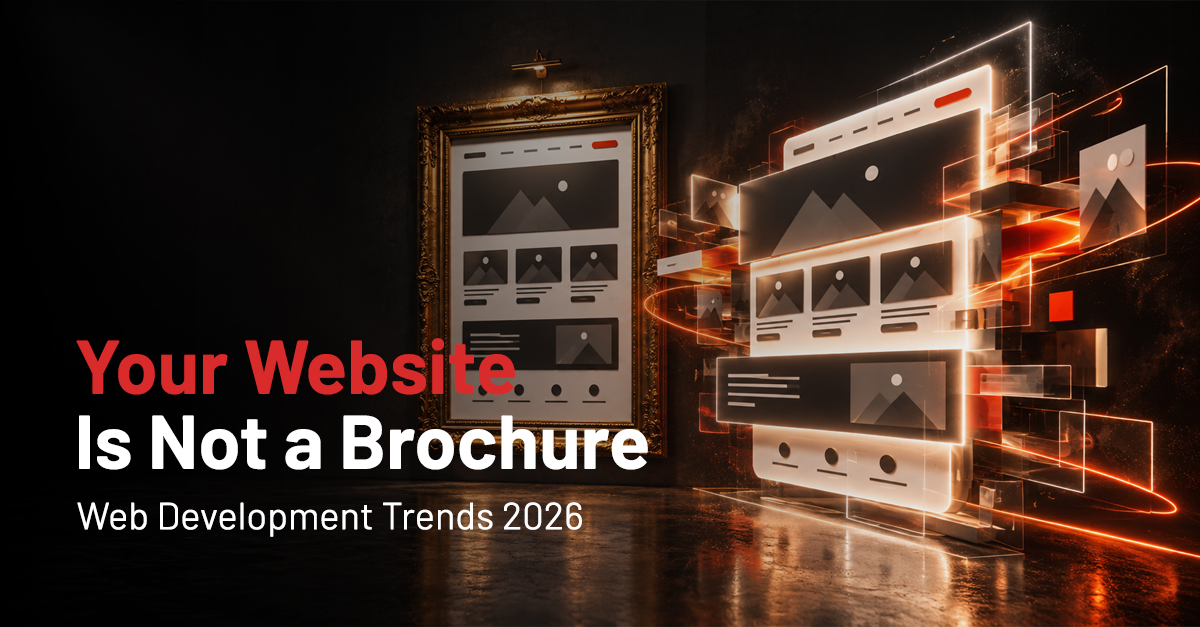
Most business websites in the Middle East are digital brochures. They look impressive in a boardroom presentation and do almost nothing for the business.
In 2026, that gap is expensive.Your website is the only salesperson who works at midnight, speaks to every prospect at once, and never asks for a raise. It is also the first thing an AI search tool reads when deciding whether to recommend you. Treating it as a design project instead of business infrastructure is one of the costliest mistakes we see.
Three shifts this year make this urgent.
First, speed is now a ranking factor you can feel. Google’s current responsiveness metric, INP, measures how fast your page reacts when someone taps a button. A beautiful site that lags on a mid-range phone in Sharjah quietly slides down the results, and loses the customer before the homepage finishes loading.
Second, AI is reading your site before your customers do. ChatGPT, Perplexity, and Google’s AI Overviews pull answers from websites that are clearly structured: real headings, direct answers, proper schema markup. A gorgeous website that machines cannot parse is invisible in the fastest-growing discovery channel there is.
Third, development itself changed. The best teams now build with AI-assisted workflows, server-first frameworks, and security standards that used to be enterprise-only. Done right, this means faster builds and lower costs. Done wrong, it means expensive pretty pages that convert nobody.
When we audit websites for businesses across the Gulf, the pattern is consistent: the highest-performing sites are rarely the flashiest. They load in under two seconds, say clearly what the business does within five seconds, make the next step obvious, and answer the questions customers actually ask.
One more thing worth saying plainly: the cost of doing this properly has dropped. AI-assisted development and modern frameworks mean a serious business website in 2026 costs less and ships faster than the equivalent site three years ago. If an agency quotes you 2022 timelines for a 2026 build, ask why.
There is also a mindset shift hiding inside the technical one. A brochure is finished the day it launches. A growth asset is never finished: it is measured, tested, and improved every month, because it is expected to produce pipeline, not applause. When you start treating your website that way, every other marketing channel gets cheaper, because they all eventually send people to the same place.
That is what a website should be in 2026: not a brochure, a growth asset.
Wulfenite Creations is a digital growth partner for ambitious brands across the Middle East. If you are planning a build or rebuild this year, we will happily review your current site first: https://wulfenitecreations.com/contact
Dubai, UAE – Working Worldwide
wulfenitecreations.com | info@wulfenitecreations.com
+971 50 712 1993
#WebDevelopment #UserExperience #DigitalTransformation #Dubai #WebDesign